Which digital loyalty programme fits your business?
Choose a loyalty programme by the behaviour you want to reward. Stamps count qualifying actions, points can reflect spending, and cashback-style cards hold future-use credit. Prepaid passes, gift cards and recurring memberships serve different purposes. Apple Wallet and Google Wallet are the destinations for the card, not competing reward structures.
The right starting point is your checkout or appointment process. What does the customer buy, what should count, and what can staff record without guessing?
Compare the main card formats
| Format | What the customer holds | Typical purpose | Main decision before launch |
|---|---|---|---|
| Stamp card | Progress towards a reward | Encourage a defined repeat purchase | What earns a stamp, and how many are required? |
| Points card | A points balance | Recognise eligible spending or activity | What are points worth at redemption? |
| Cashback-style card | Credit to spend with the business | Encourage a future eligible purchase | Is this store credit, and how can it be used? |
| Prepaid pass | A purchased allowance of visits or services | Sell a package in advance | What is included, and how is each use deducted? |
| Membership | Entitlement to specified ongoing benefits | Offer a continuing customer relationship | Which benefits apply, and how does billing work? |
| Gift card | Value bought for a recipient | Let someone give a purchase benefit | How are balance, expiry and redemption handled? |
| Discount card | Eligibility for an immediate reduction | Offer defined member pricing | Which items and customers qualify? |
| Coupon | A specific promotional entitlement | Run a time-limited or targeted offer | What are the usage and expiry rules? |
These are purposes to compare, not instructions to run eight offers at once. Each extra rule creates something staff must explain and customers must remember.
Digital stamp cards: reward a qualifying action
A stamp card can be straightforward when customers repeatedly buy a similar item or service. The progress is easy to describe: complete the required purchases, then claim the stated reward.
The important word is “qualifying”. A visit, a transaction and an item are not interchangeable. A customer who buys three drinks in one transaction may earn one or three stamps depending on your design.
Stamps can also create a mismatch when prices vary widely. If a short appointment and an expensive treatment earn identical progress, decide whether that matches your objective. Simplicity is valuable, but it should be intentional.
Boots Advantage Card: identity and balance together
Boots’ official screenshot combines a digital card with a points balance. It illustrates a different customer view from a card with a single stamp-completion target.
Official imagery captured 28 October 2026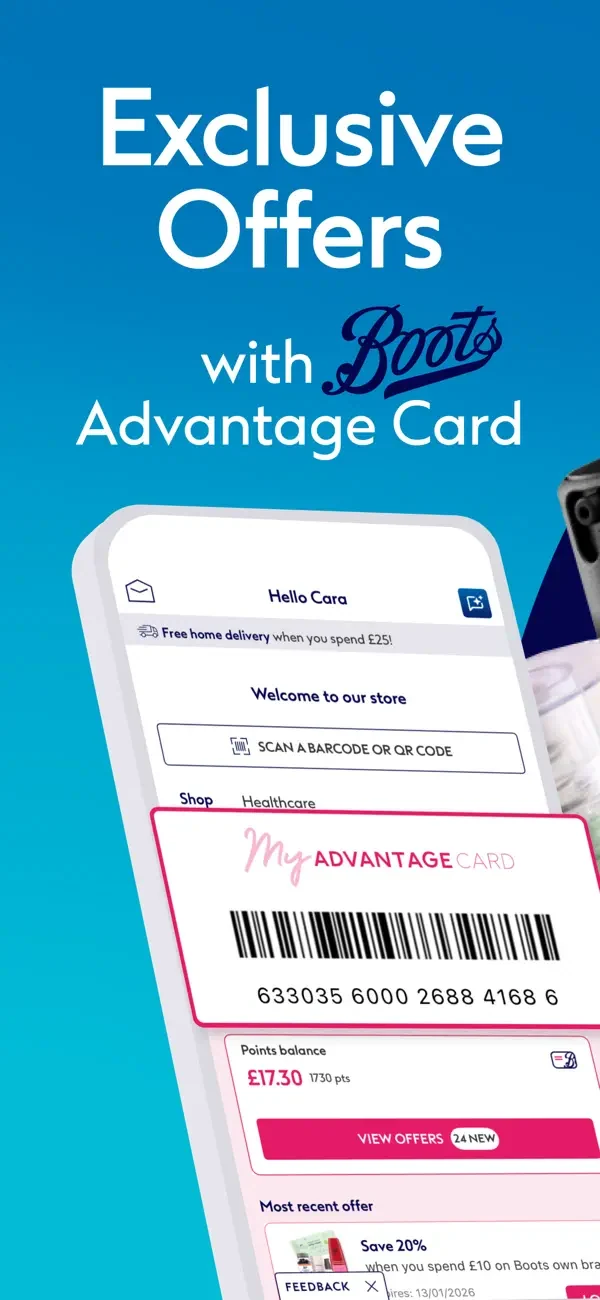
Digital points cards: define both sides of the exchange
Points need an earning rule and a redemption rule. “Earn one point for every £1” says nothing about the eventual reward unless customers also know what a point buys.
An illustrative structure might award one point per eligible £1 and allow 100 points to be used for a £5 benefit. That represents 5% of qualifying spend at the stated conversion, before considering exclusions, thresholds or unused balances. It is an example, not a suggested default.
Show the customer how to reach a recognisable reward. A balance of 240 points is not informative if nobody knows whether the next useful reward costs 250 or 2,500.
Cashback-style credit versus an immediate discount
| Question | Future-use store credit | Immediate discount |
|---|---|---|
| When does the customer use the benefit? | On a later eligible purchase | On the current purchase |
| What needs tracking? | Earning, outstanding credit and redemption | Eligibility and discount application |
| What needs explaining? | Credit restrictions, expiry and returns | Included products, exclusions and stacking |
| Key commercial risk | Credit obligations and subsidising existing spending | Reducing margin without changing future behaviour |
Neither is automatically more profitable. Future-use credit may encourage another visit, but the outcome depends on the offer and whether that visit would have happened anyway.
Use the term “store credit” when the benefit cannot be withdrawn as money. The cashback guide explores the mechanic further.
Keep ongoing earning separate from selected offers
Boots’ issuer-provided offers screen makes promotional choices visible. A standing earning rule and an activated promotion need distinct explanations and eligibility checks.
Official imagery captured 28 October 2026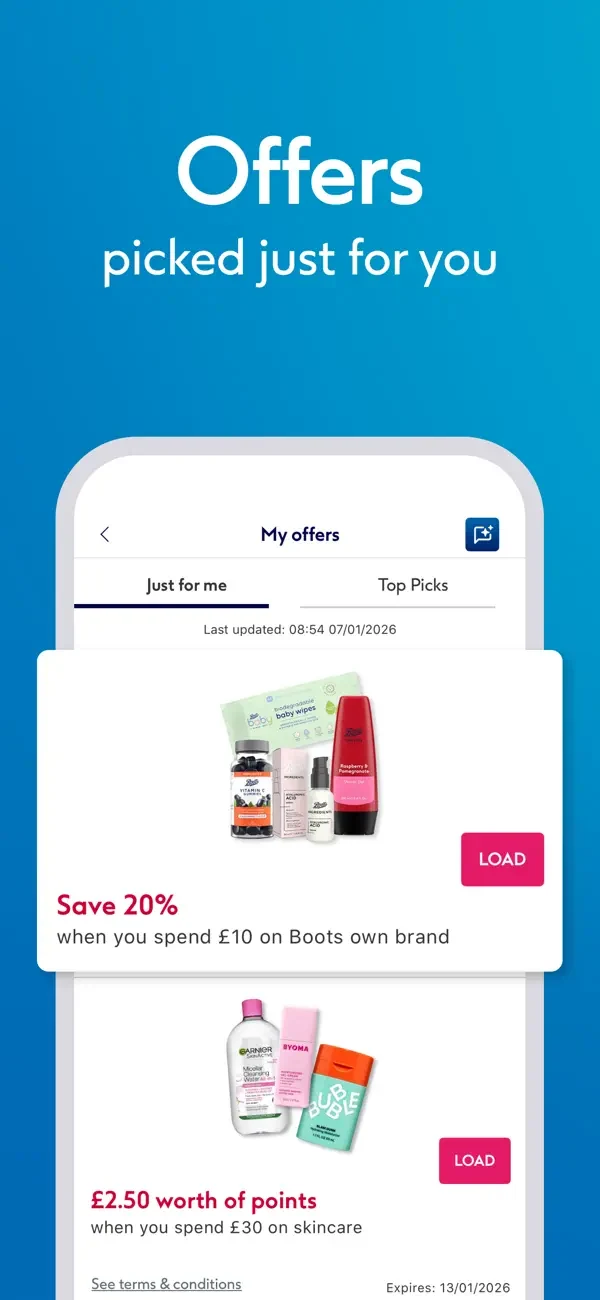
Prepaid passes versus recurring memberships
A prepaid pass sells a defined package. A recurring membership sells continuing benefits under a billing arrangement. A loyalty stamp card rewards qualifying purchases that happen over time.
| Structure | Payment relationship | Example to explore | Main operating requirement |
|---|---|---|---|
| Stamp reward | Customer pays for qualifying purchases | Reward after a set number of visits | Record earning and redemption |
| Prepaid pass | Customer buys a package upfront | A fixed block of appointments | Track remaining uses and conditions |
| Paid membership | Customer pays for continuing benefits | A monthly package with named inclusions | Manage entitlement, billing and cancellation |
MSTRMND’s membership offer includes Stripe-based subscription billing. Confirm the specific setup, payment processing requirements and terms before presenting a membership for sale. A wallet pass alone does not collect a recurring payment.
Apple Wallet or Google Wallet?
Treat this as a customer-device question. The programme’s earning and redemption rules should remain consistent across the two wallet destinations.
Test the appearance and installation separately. Do not assume the same screen arrangement, notification behaviour or device settings on every phone. The customer journey guide covers the operational steps.
Choose with these four questions
- What should change? A second visit, repeat service, higher eligible spend or a continuing membership are different objectives.
- What will customers understand? Test the offer without explaining the entire platform.
- What can staff record reliably? A sophisticated reward is not useful if busy staff apply it inconsistently.
- What will the reward cost? Include delivery, administration and any capacity used.
Pro tip. Launch one main offer first. Add a second format only when it solves a different customer need and your team can explain when each one applies.
Frequently asked questions
Are stamps always better than points?
No. Stamps can simplify similar repeat purchases. Points can reflect varied spending. Compare the customer journey and your actual price range.
Can I combine stamps and points?
MSTRMND supports multiple card formats, subject to the selected plan and configuration. Confirm availability, then decide whether customers need both offers.
Is a membership card automatically a subscription?
No. A card can identify membership without collecting payments. A paid recurring offer needs a configured billing arrangement and clear customer terms.
Is cashback paid into a bank account?
That depends on the scheme. The examples here describe credit for future eligible purchases with the issuing business, not a bank payout.
Is a gift card a loyalty reward?
Usually a gift card represents value purchased in advance. It can sit alongside a loyalty programme, but its balance and obligations need separate rules.
Does the same card work on every phone?
The programme can offer Apple Wallet and Google Wallet versions for supported devices. Check the actual installation and use on the phones your customers have.
Can I change the structure later?
Plan the transition, explain the new rules and decide how to honour existing balances or progress. Do not treat changing the design as permission to remove earned value.
Find the simplest workable format
Discuss your card options, compare points and stamps, or choose the reward first.