How to choose rewards for your digital loyalty programme

Choose a loyalty reward by balancing customer appeal, delivery cost and the behaviour you want to encourage. Define exactly what earns progress, when the benefit becomes available and how it is redeemed. Test the offer against different customer journeys before turning it into an Apple Wallet or Google Wallet card.
Your card makes the programme visible. The reward gives customers a reason to use it.
Compare the reward options
| Reward | What customers receive | Why a business might choose it | Watch for |
|---|---|---|---|
| Named product | A selected item after qualifying activity | A concrete benefit with a clear finish line | Stock availability, variants and extras |
| Service add-on | A defined enhancement to an appointment | Recognise repeat visits without discounting every service | Labour, booking time and capacity |
| Fixed-value benefit | A stated amount against eligible purchases | A straightforward value proposition | Minimum spend, exclusions and margin |
| Points redemption | Benefits exchanged for a balance | Flexibility across different purchase values | Conversion complexity and unclear thresholds |
| Future-use credit | Credit earned for a later purchase | A reason to consider another visit | Outstanding balances, expiry and returns |
| Member benefit | Continuing entitlement under a membership | A separate paid relationship | Sustainable usage, billing and cancellation |
These are design options. Confirm that your selected card type, plan and configuration support the offer before advertising it.
Start with the next action
Ask what you want the customer to do differently. A second visit, a repeat booking and a larger qualifying basket need different incentives.
Do not pay for an action you cannot recognise. If staff record visits but not purchase amounts, a spend-based earning rule needs a reliable way to capture eligible spending first.
A programme can also recognise existing regulars without claiming to change their behaviour. That may be a valid service objective, but account for its cost honestly.
Compare value with cost
Suppose a café is considering a reward drink with a selling price of £4. An illustrative direct cost might be £1.20 for ingredients and consumables. A £4 cash discount on an otherwise identical full-price order would reduce the amount collected by £4.
Those are different commercial effects. The drink can still use staff time and capacity, and some customers would have paid for it anyway. The £1.20 is an assumed cost for this example, not a benchmark for cafés.
For a salon, an add-on with low product cost may take appointment time. Include that time and the risk of displacing another booking.
| Cost question | What to record |
|---|---|
| What does the customer see? | The exact product, service or stated credit |
| What do you supply? | Materials, labour and other direct costs |
| What else could you sell? | Capacity or margin forgone |
| What must staff do? | Awarding, redemption, corrections and support |
| How often might it be used? | A realistic redemption scenario, including frequent members |
Superdrug: make the next reward understandable
Superdrug’s official screenshot shows progress towards a VIP reward. It demonstrates the importance of explaining the next threshold and the benefit it unlocks.
Official imagery captured 28 October 2026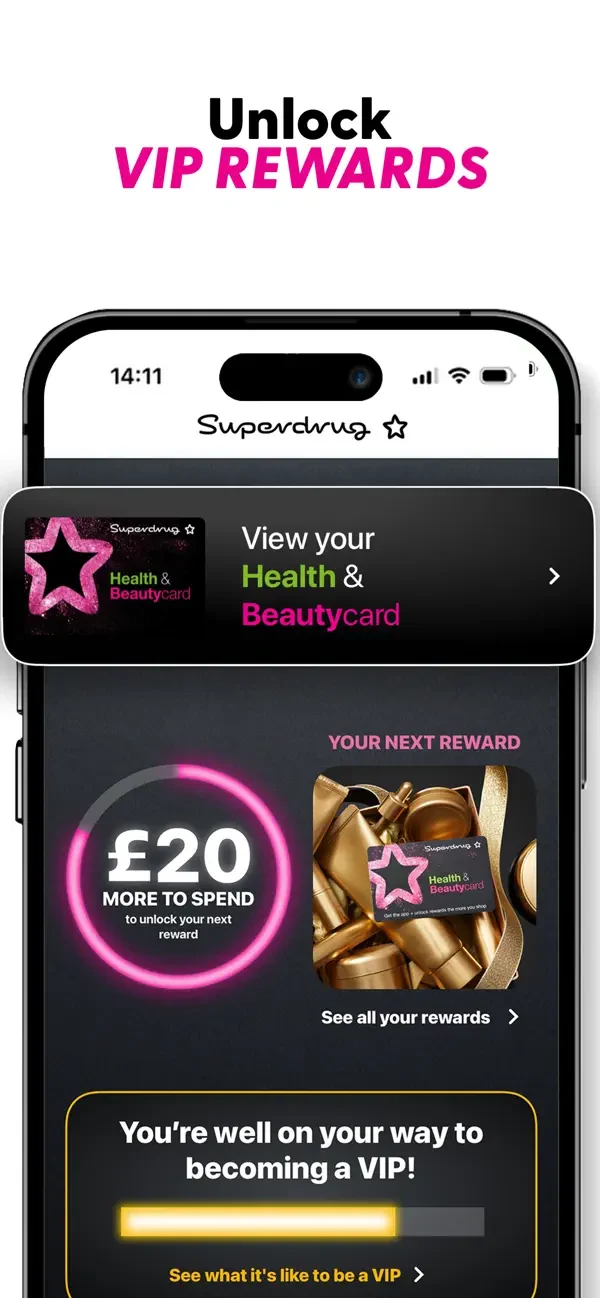
Write the earning rule
Use a rule your staff can apply to an ordinary receipt:
Earn one stamp for each paid drink from the qualifying menu. Collect eight stamps to claim one regular hot drink from the reward selection. Published exclusions apply.
That is an illustrative template. If the real rule is one stamp per transaction, change the sentence rather than expecting staff to explain the difference later.
For points, specify the eligible amount and any rounding. Decide whether earning uses the price before or after discounts, and what happens when a transaction is refunded.
Write the redemption rule
Earning and spending the reward should be equally clear. Record:
- The benefit the customer can choose.
- The required balance or completed progress.
- The eligible purchase or appointment, if one is required.
- Whether the reward can combine with another offer.
- Any stated expiry or booking condition.
- How staff record use and handle corrections.
Do not use a vague “terms apply” line as a substitute for an understandable offer. Customers need access to the actual terms before committing effort or money.
Test three customer journeys
| Illustrative customer | Test purchase pattern | What to inspect |
|---|---|---|
| Frequent visitor | Many small qualifying purchases | Whether reward delivery remains sustainable |
| Occasional visitor | Purchases spread across a longer period | Whether progress feels attainable and expiry is reasonable |
| Higher-spending customer | Fewer purchases with larger values | Whether the earning rule recognises the behaviour you intended |
Run each journey through earning and redemption, including an excluded item or a refund. If the outcome seems unfair, adjust the rules before launch.
Member pricing is a different kind of benefit
Superdrug’s issuer-provided member-price screen is a useful contrast with an earned reward. Define who qualifies and when the benefit is applied.
Official imagery captured 28 October 2026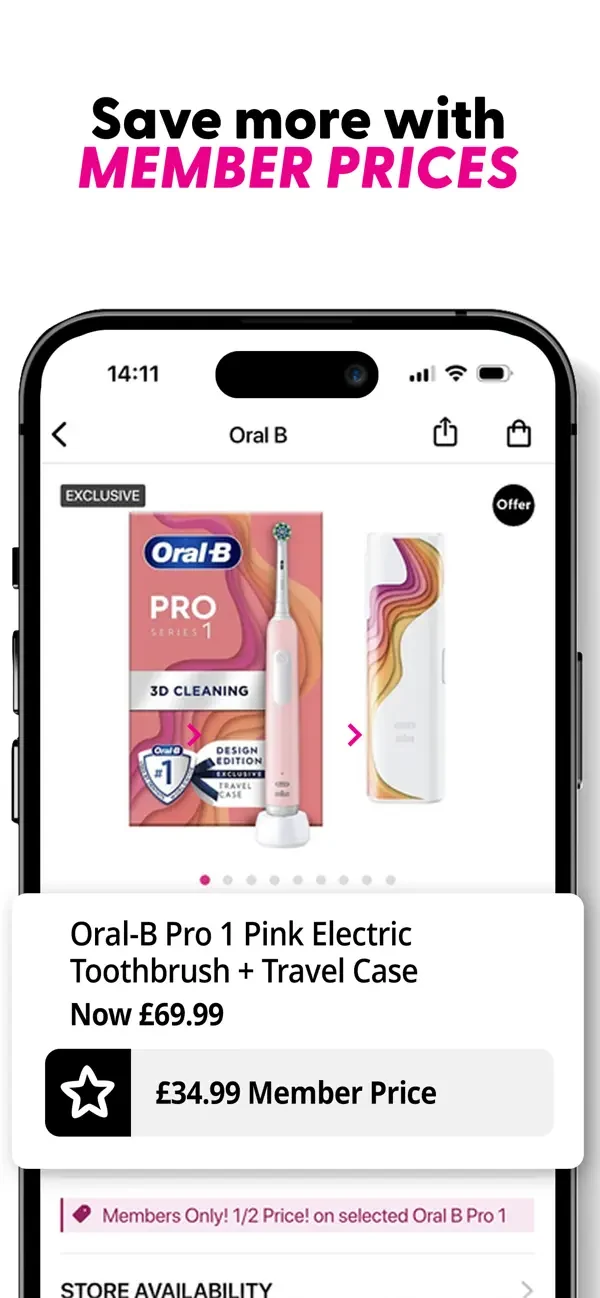
Explain the offer on the wallet card
The customer should recognise the business, understand the progress and know what comes next. Put the main promise where it can be read on a phone, then provide access to the full conditions.
Test a nearly complete card as well as an empty one. Test large balances, longer business names and the reward-used state. The most attractive empty mock-up may not be the most useful working card.
Review the reward without constantly changing it
Choose a review period, record the original rules and note any changes. Compare joins, earning, returns, redemption and cost. A low redemption rate can mean the reward is unappealing, too distant, poorly explained or simply not yet earned.
Change one major element at a time when possible. If you change the threshold, reward and staff script together, you will struggle to learn which change mattered.
Pro tip. Ask customers what they think the reward includes before showing them the exclusions. The gap between their expectation and your rules is what you need to fix.
Frequently asked questions
What rewards work best for small businesses?
Rewards that customers want and the business can deliver consistently. A named product, useful add-on or clearly valued credit may work; the best choice depends on the purchase and cost structure.
Should I offer a percentage or a fixed-value reward?
Compare customer understanding and your margins. A fixed value can be easier to explain, while a percentage varies with the purchase. Both need eligibility rules.
How generous should the reward be?
Use your actual delivery costs and test different redemption scenarios. There is no universal percentage that makes every loyalty programme worthwhile.
Should joining earn a bonus?
It can be part of an offer, but define it clearly and include its cost. A signup bonus is not evidence that a customer will return.
Can I reward referrals?
Only use a referral mechanism your system and verification process can support. Define what counts as a qualifying referral and when any benefit becomes earned.
What if a customer returns a qualifying purchase?
Write the adjustment rule before launch and make it visible. Staff should know how to handle earned progress and any reward already used.
Can I change rewards later?
Yes, with a planned transition and clear communication. Decide how existing points, stamps, credit and earned rewards will be treated before changing the offer.
Turn the offer into a working programme
Discuss your reward idea, compare examples, or complete the design checklist.