Digital loyalty cards: how they work and how to create one
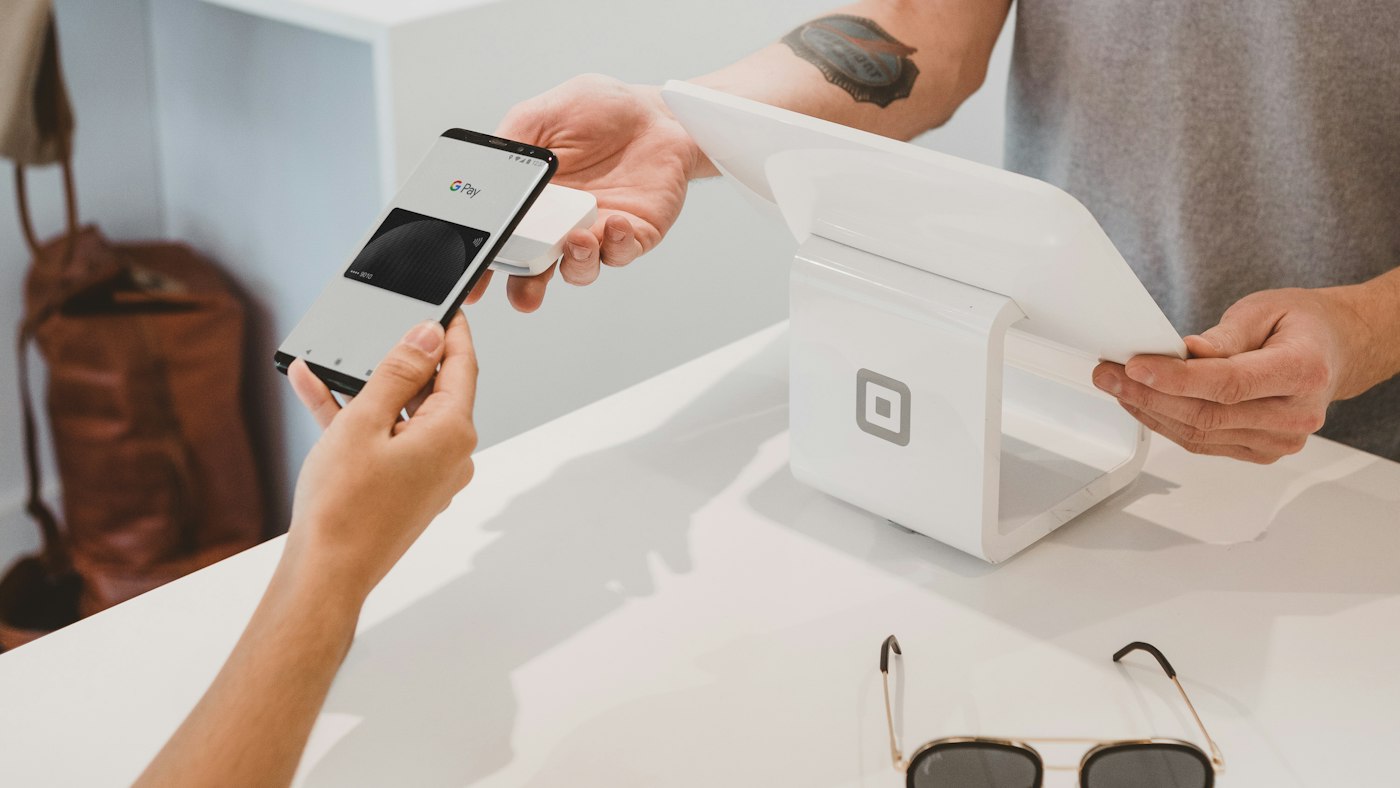
A digital loyalty card is a rewards card that lives in a customer's Apple Wallet or Google Wallet instead of their pocket. They add it by scanning a QR code once. No app, no account, no password. Your staff add stamps or points by scanning the card at the till. The part paper cannot do is the part that matters: you can see who is close to a reward, who has stopped coming, and you can message all of them for free.
How to create one
- Pick the card type. Stamps for flat-priced, frequent purchases. Cashback or points where the amount spent varies a lot.
- Set the reward. Reachable in four to six visits, costing you less than the visits it brings back.
- Design the card with your logo, your colours, and your wording front and back.
- Put a QR code where customers pay. This is the entire acquisition funnel.
- Scan to award. Staff use a scanner app on any phone. Customers do nothing.
- Message the people who drift. Free, unlimited, and the reason the digital version beats paper.
Setup takes an afternoon. Getting your team to mention it at every single transaction takes longer, and matters more.
Pro tip. Put the QR code at the card machine, not on the wall. It needs to be in the customer's eyeline at the moment they are already holding their phone. A poster by the door gets read by nobody.
Digital against paper
| Paper stamp card | Digital loyalty card | |
|---|---|---|
| Customer has to carry it | Yes, and they lose it | No. It is in the phone already in their hand |
| You know who holds one | No | Yes |
| You know who stopped coming | No | Yes, and this is the real difference |
| Reaching them costs | A reprint, or nothing, because you cannot | £0 on wallet push |
| Fraud | A borrowed stamp | Every scan tied to a staff member |
| Ongoing cost | Around £40 a print run, again and again | A flat monthly fee, messaging included |
The third row is the one to sit with. Paper rewards loyalty but cannot detect its absence. That is how a punch card programme runs for three years while regulars quietly stop coming and nobody notices until the takings show it.
Cashback beats a discount card
If your customers already come back often, use cashback rather than a standing discount. The two feel almost identical at the till. They behave completely differently afterwards.
A discount is spent at the moment of sale. You give up the margin, the customer walks out, and nothing about that transaction gives them a reason to return. Cashback gives up the same margin and turns it into a balance that only exists with you. The customer leaves holding something they can only spend by coming back.
| Discount card | Cashback card | |
|---|---|---|
| When the value lands | At the till, instantly | After the visit, as a balance |
| What the customer keeps | Nothing | Credit that only redeems with you |
| Effect on your prices | Resets what your customer thinks normal costs | Leaves your price list intact |
| Reason to return | None | The balance itself |
| Best for | Clearing stock, one-off pushes | Any business with genuine repeat custom |
Are digital loyalty cards free?
Some are, and it is worth knowing the trade. Free tools usually cap how many customers you can hold, limit you to one card type, put their own branding on your card, or charge you for the messaging. That last one matters, because messaging is the part that does the work.
MSTRMND is not free. It starts at £31 a month, with no setup fee and a 14-day free trial, so you can run a real programme before paying anything. Unlimited push is included on every plan rather than billed per send.
If your customer list is under about 30 people, a free tool is genuinely the right answer. So is paper. You do not have a data problem yet.
Pro tip. Show the ordinary price next to the member price. the CMA's 2024 review of supermarket loyalty pricing found that on 92% of loyalty-priced products the non-member price was the same or cheaper than the 28 days before, and yet 55% of shoppers still believed they were being marked up. That gap is a trust problem you can close with one line of labelling.
What the research says about whether they work
Kivetz, Urminsky and Zheng (2006), Journal of Marketing Research tracked a real café buy-ten-get-one-free programme. Three findings are worth knowing before you design yours.
| Finding | The number |
|---|---|
| Customers speed up as the reward approaches | 20% acceleration, about five days off a full card (24.6 days against 29.4) |
| A part-filled card finishes faster | A 12-stamp card carrying two free stamps: 12.7 days, against 15.6 for a plain 10-stamp card |
| Behaviour drops once the reward is claimed | Rates reset downward, and customers were most likely to leave at that moment |
Will your customers use it?
UK Finance's UK Payment Markets 2025 reports that 65% of UK adults were registered for at least one mobile payment service in 2025, up from 57% a year earlier. That splits hard by age: 89% of 25 to 34 year olds, and 29% of over-65s.
For most trades the wallet is already open on the phone. Where your customers skew older, keep a paper option running alongside. It costs you very little and it avoids turning a loyalty scheme into a barrier.
Your team is the programme
A loyalty programme is only ever as big as the number of people who were asked to join it. That number is decided at the counter, by whoever takes payment, on every single transaction. Not by marketing.
This is the part that quietly decides whether any of this works, and it is the part most owners never manage. A programme with a great reward and an inconsistent front desk loses to a modest reward and a team who ask every time.
Three things make it stick:
- Script the ask so nobody has to invent it under pressure.
- Put it inside the payment routine, not after it. Anything optional at the end of a transaction happens on quiet days only.
- Show staff their own numbers. People ask more often when sign-ups are visible and attributed.
Make the offer explicit
People hand over a phone number and their buying history. Say plainly what they get for it. A card that appears in someone's wallet without a clear promise attached is the reason loyalty schemes get ignored, and it is the reason some get resented.
Put three things in front of the customer at the moment they join:
- What they earn, in plain terms. Not "rewards", but "5% back on everything, spendable here".
- What you collect, in one line. Their number, what they buy, and when.
- What you will send, and how they stop it. Frequency and a one-tap opt-out.
That clarity is not only good manners. It is the same disclosure that consent rules expect, so writing it once solves the marketing problem and most of the compliance problem together.
Pro tip. Ask for less data than you are allowed to. In a UK survey of 1,534 people, 51.8% were willing to share loyalty card data, well ahead of search history, phone or social data at roughly 30% to 35%. Loyalty data is the most acceptable thing you can ask a customer for. Bundling extra questions onto the sign-up spends that goodwill for nothing.
What a digital loyalty card cannot fix
A reward set so far away that nobody counts toward it. A team that never mentions it at the counter. A business with no repeat purchase to reward in the first place.
The software is good at remembering and terrible at caring. The caring is still your job.
Frequently asked questions
What is a digital loyalty card?
A rewards card stored in Apple Wallet or Google Wallet rather than a physical card. Customers add it by scanning a QR code, staff scan it to award stamps or points, and the business can update the card and message its holders remotely.
Do customers need to install anything?
No. Apple Wallet and Google Wallet are already on the phone, and there is no account to create. That is why wallet cards enrol far better than branded apps.
How do I make one for my business?
Choose a card type and a reward, design the card, put a QR code where customers pay, and scan them in at the till. That is an afternoon, and the free trial covers it.
Can I transfer my paper punch card customers?
Yes. Honour their existing stamps and add them at their current count on the next visit.
What does it cost?
From £31 a month with no setup fee, unlimited push notifications included.
Sources
- Kivetz, R., Urminsky, O. & Zheng, Y. (2006). The Goal-Gradient Hypothesis Resurrected. Journal of Marketing Research 43(1), 39–58. Full paper (columbia.edu)
- UK Finance, UK Payment Markets 2025. Press release (ukfinance.org.uk)